Fake business listings: how to check who you are paying in Ghana
Fraudsters are placing fake business listings on search engines and online maps, Ghana's Cyber Security Authority warns. The checks to make before paying - and what to do if money has already gone.
By Ernest · 24 October 2026
What the CSA warned
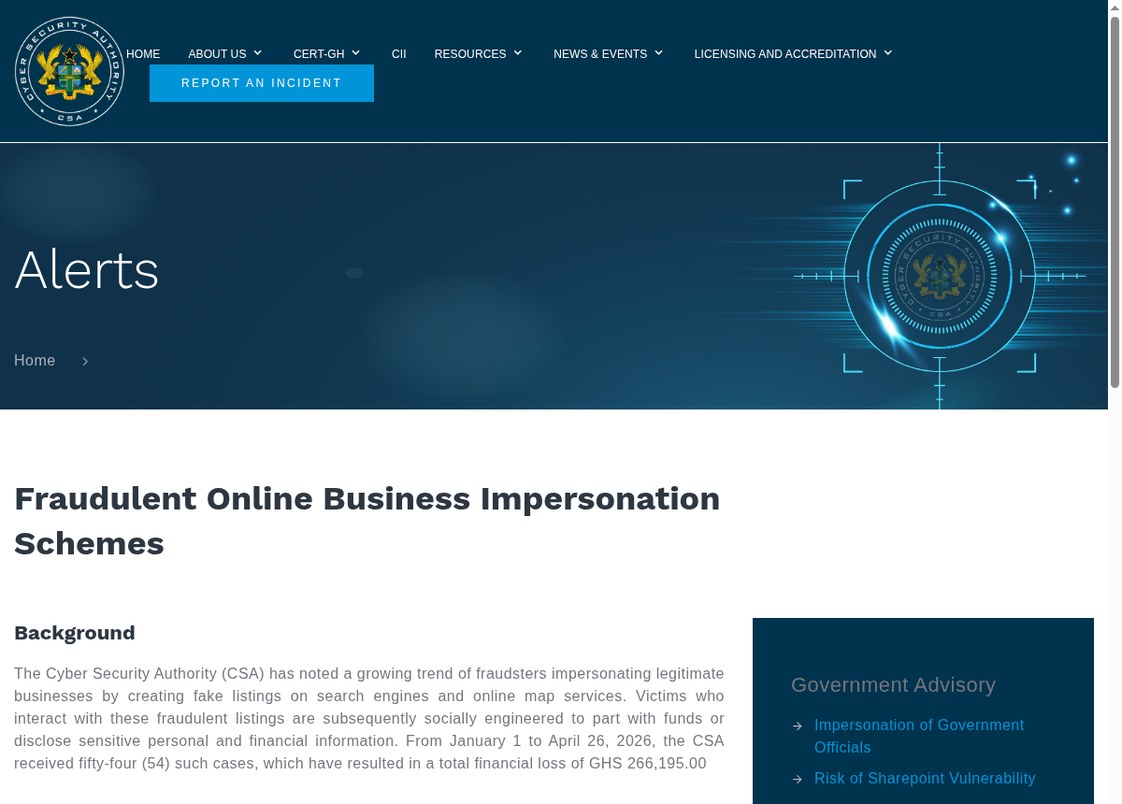
In an alert titled "Fraudulent Online Business Impersonation Schemes", the Cyber Security Authority (CSA) says fraudsters are impersonating legitimate businesses by creating fake listings on search engines and online map services. People who use those listings are then socially engineered into sending money or giving up personal and financial information.
Between 1 January and 26 April 2026, the CSA says it received 54 such cases, with total reported losses of GH₵266,195.
How the scam works
The first steps feel ordinary. A customer searches for a business, finds a phone number on a search result or map listing, and calls. According to the CSA, the fraudster uses the name and address of a real business but substitutes a contact number they control. Prices, photographs and descriptions are often already public, so the conversation can sound like a genuine booking or sale.
The CSA says some victims were directed to online forms asking for their phone number, mobile network, transaction amount and mobile money PIN. Once that information is submitted, the fraudsters carry out unauthorised transactions.
A typical pattern, described by cybersecurity GRC specialist Valerie Arko-Adjei to MyJoyOnline: a customer finds a number online, discusses a booking and sends a deposit - then the business says it never received the money. The person who answered the call was pretending to work there.
The wider fraud picture
The warning lands during Ghana's National Cyber Security Awareness Month. At the campaign's launch in September, CSA Director-General Divine Selase Agbeti said the national Computer Emergency Response Team (CERT-GH) recorded 3,876 cybersecurity incidents between January and July 2026, of which 1,818 - about 47% - were linked to online fraud, the Ghana News Agency reported. That figure covers online fraud generally; it is not a count of fake business listings.
Checks before you pay
The CSA's own recommendations:
- Verify contact details through the business's official website or trusted sources before starting a conversation. A number beside a business name in a search result does not prove it belongs to the business.
- Be cautious of listings with limited reviews or recently created profiles.
- Confirm payment requests directly with the business using contact details you verified independently. If payment instructions suddenly change - a new mobile money number, a personal account - confirm the change through a different channel. Calling the number that sent the new instructions only reaches the person whose identity you are trying to check.
- Never disclose mobile money PINs, one-time codes or banking credentials. A request for a PIN or code ends the conversation.
If you are paying from abroad - a deposit for a guesthouse, a car hire, a family event vendor - the same checks apply, and an independent verification channel matters even more when you cannot walk in.
If you have already paid
Act quickly. Contact your payment provider, explain what happened, and ask what steps are available for that transaction. Keep screenshots of the listing and the conversation, along with the phone number and payment reference. If you shared a PIN or one-time code, secure the affected account immediately, then report the incident.
How to report
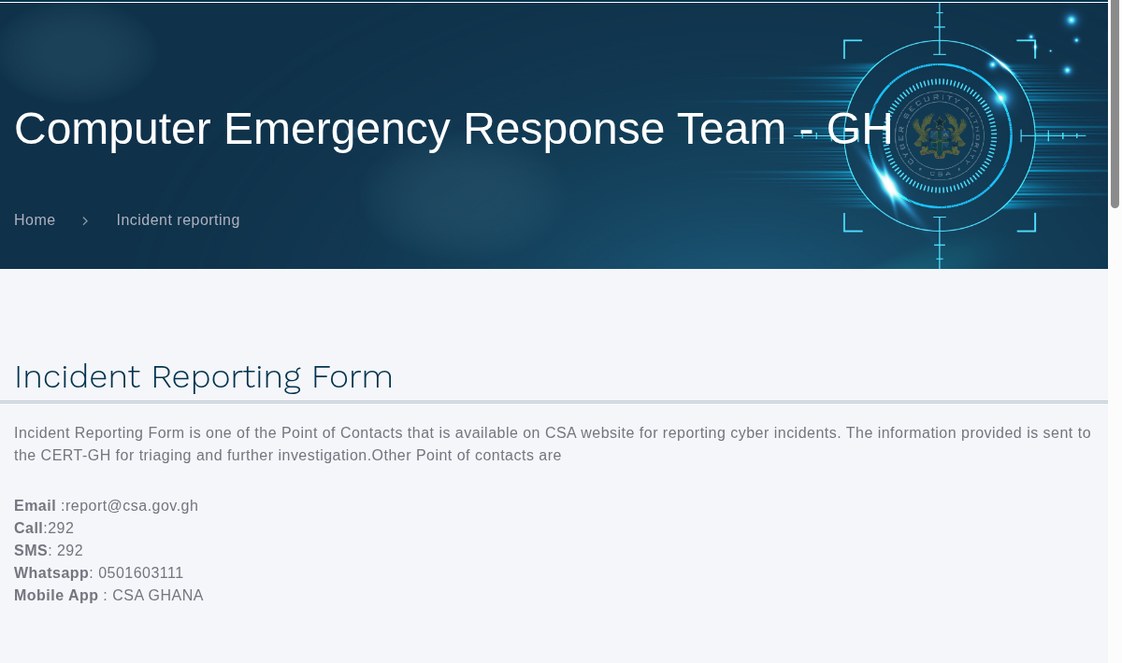
Suspicious listings and cybercrime incidents in Ghana can be reported to the CSA:
- Call or SMS: 292
- WhatsApp: 050 160 3111
- Email: [email protected]
- Online: the incident reporting form on csa.gov.gh
Business owners can also search their own names and check the phone numbers shown in map results; the CSA asks that suspicious listings be reported for investigation.
Sources
- Cyber Security Authority - "Fraudulent Online Business Impersonation Schemes" (CERT-GH alert)
- Cyber Security Authority - incident reporting contacts
- Ghana News Agency - "Online fraud accounts for 47% of Ghana's cyber incidents - CSA"
- MyJoyOnline - "Fake business listings: How Ghanaians can check who they are paying"
This guide is general information, not security advice for a specific incident. If money or credentials are involved, contact your payment provider and the CSA directly.