Renting out a home in Ghana from Ireland? What Revenue expects from you
Ireland taxes your Ghana rental income, and the Ireland-Ghana tax treaty is signed but not yet in force. What to declare, what to deduct, which records to keep and when to file.
By Ernest · 12 October 2026
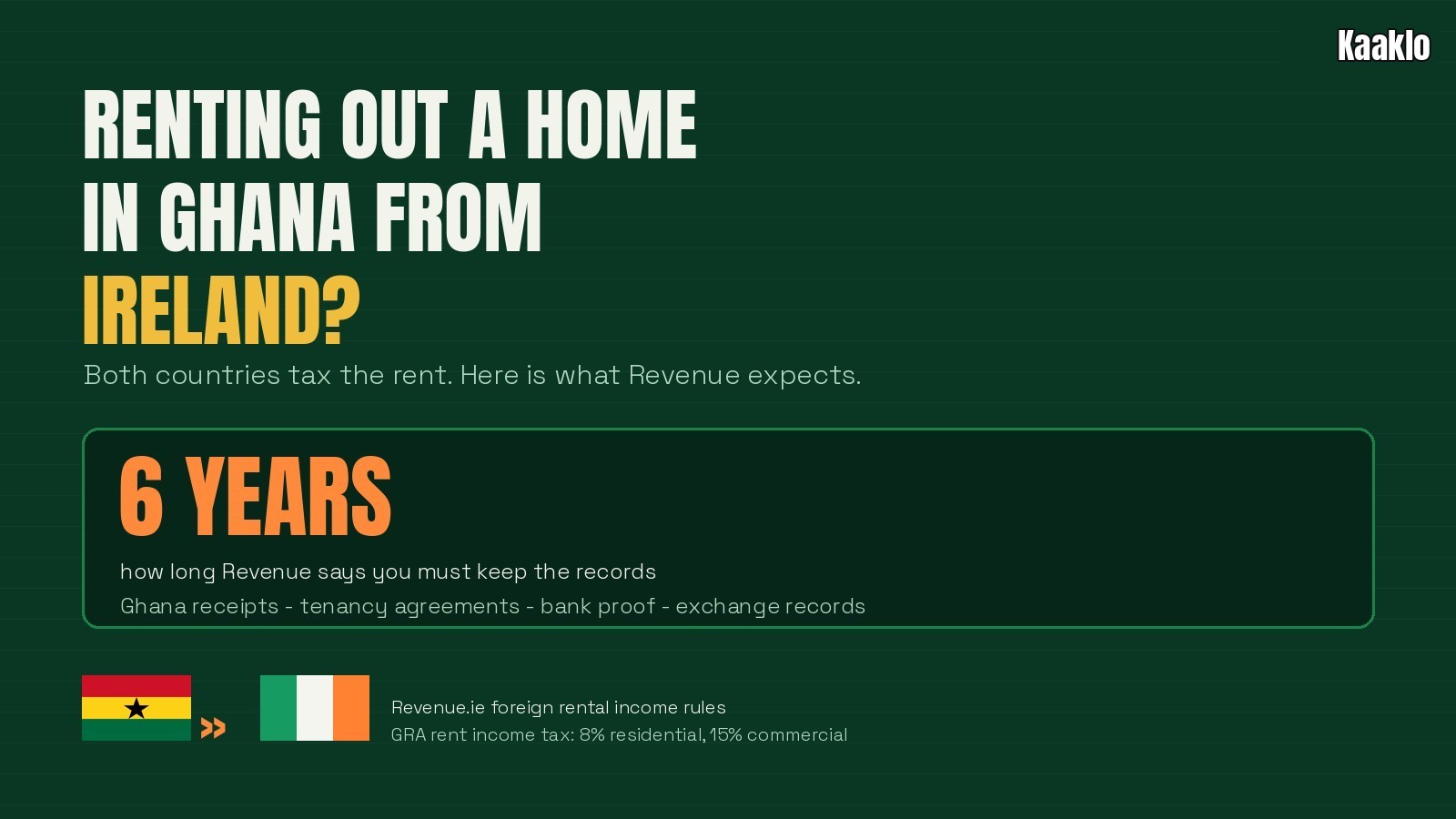
If you live in Ireland and rent out a house, flat or shop in Ghana, both countries want tax on that rent. Ghana charges rent income tax at 8% for residential premises and 15% for commercial ones, due within 30 days of receiving the rent. [4] Ireland taxes its residents on foreign rental income too. [1] Here is how the two sides fit together, and the records to keep.
First: the Ghana side
The Ghana Revenue Authority charges rent income tax on what you receive from letting a property: 8% for residential premises, 15% for commercial and non-residential premises. Payment is due within 30 days after the rent income is received, and late payment attracts interest. GRA says to keep copies of all payment receipts for inspection. [4]
How Ireland taxes it
If you are resident and domiciled in Ireland, you pay Irish tax on the rental income wherever in the world it comes from, including Ghana. [1] Your taxable foreign rental income is the rent you expect to receive, minus allowable expenses, and the net figure goes on your Form 11 or Form 12. [2] If you are resident but not domiciled in Ireland, you are taxed on the "remittance basis": only the foreign rental income you actually bring into Ireland counts, and on that basis you cannot claim deductions. [1][2]
If your other income comes from a PAYE job, you may be able to pay the Irish tax on modest rental income by reducing your tax credits instead of registering for self-assessment. That route applies only where your gross non-PAYE income is under €30,000 and your net non-PAYE income is under €5,000. [2] A loss on the Ghana property can only be offset against profits from other foreign rental properties, never against Irish rental profits. [2]
The treaty gap that matters
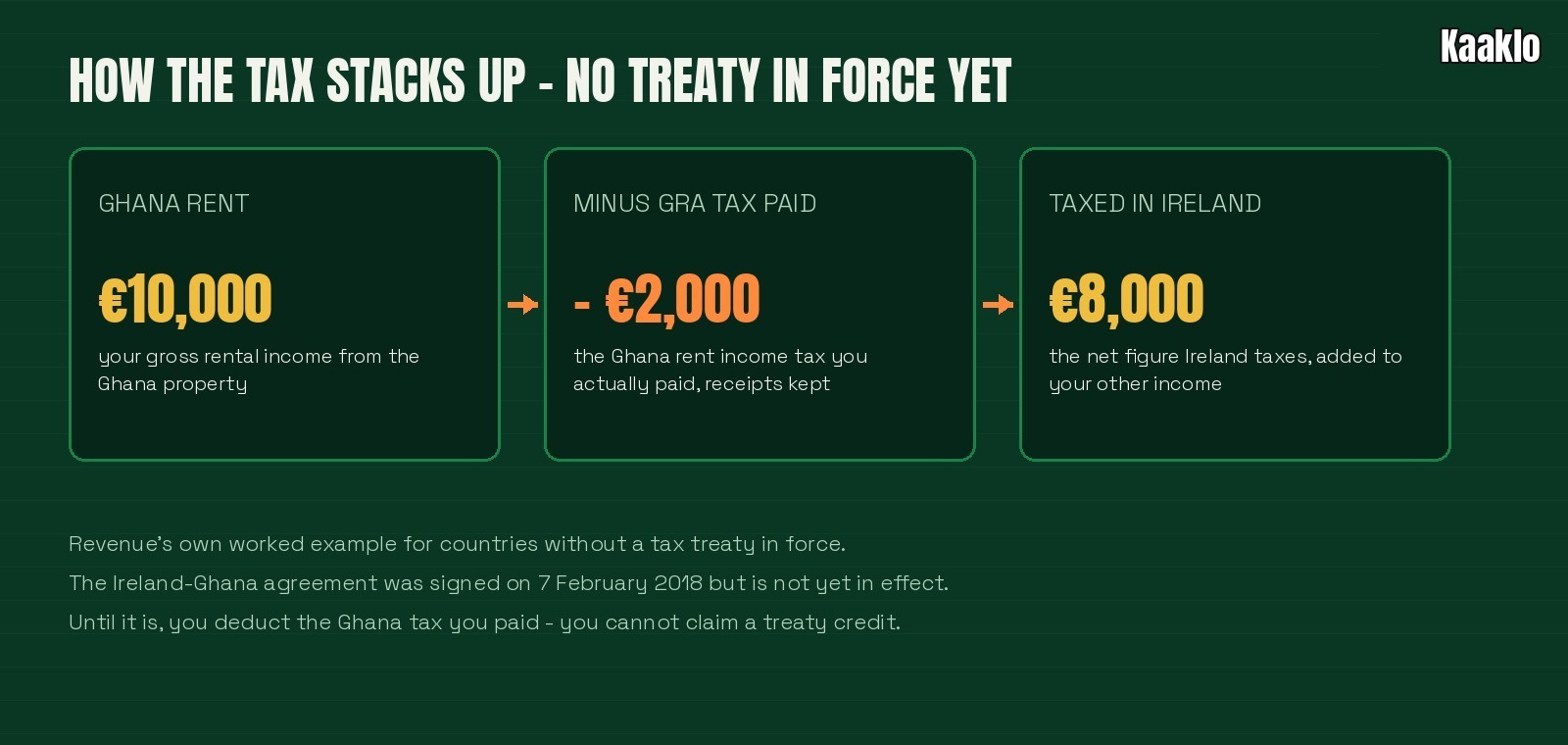
Ireland and Ghana signed a double taxation agreement on 7 February 2018, but Revenue says it is not yet in effect. [5] That changes how you avoid being taxed twice. With no treaty in force, you cannot claim a treaty credit. Instead, you deduct the Ghana tax you actually paid from the rental income before Ireland taxes it. Revenue's own worked example: €10,000 of foreign rent, €2,000 of foreign tax paid, leaves €8,000 taxable in Ireland alongside your other income. [3]
One caution: if a country ever charges tax on "deemed" rental income (rent you were expected to earn but did not actually receive), that tax cannot be offset against your Irish bill. [3]
The paper trail to keep
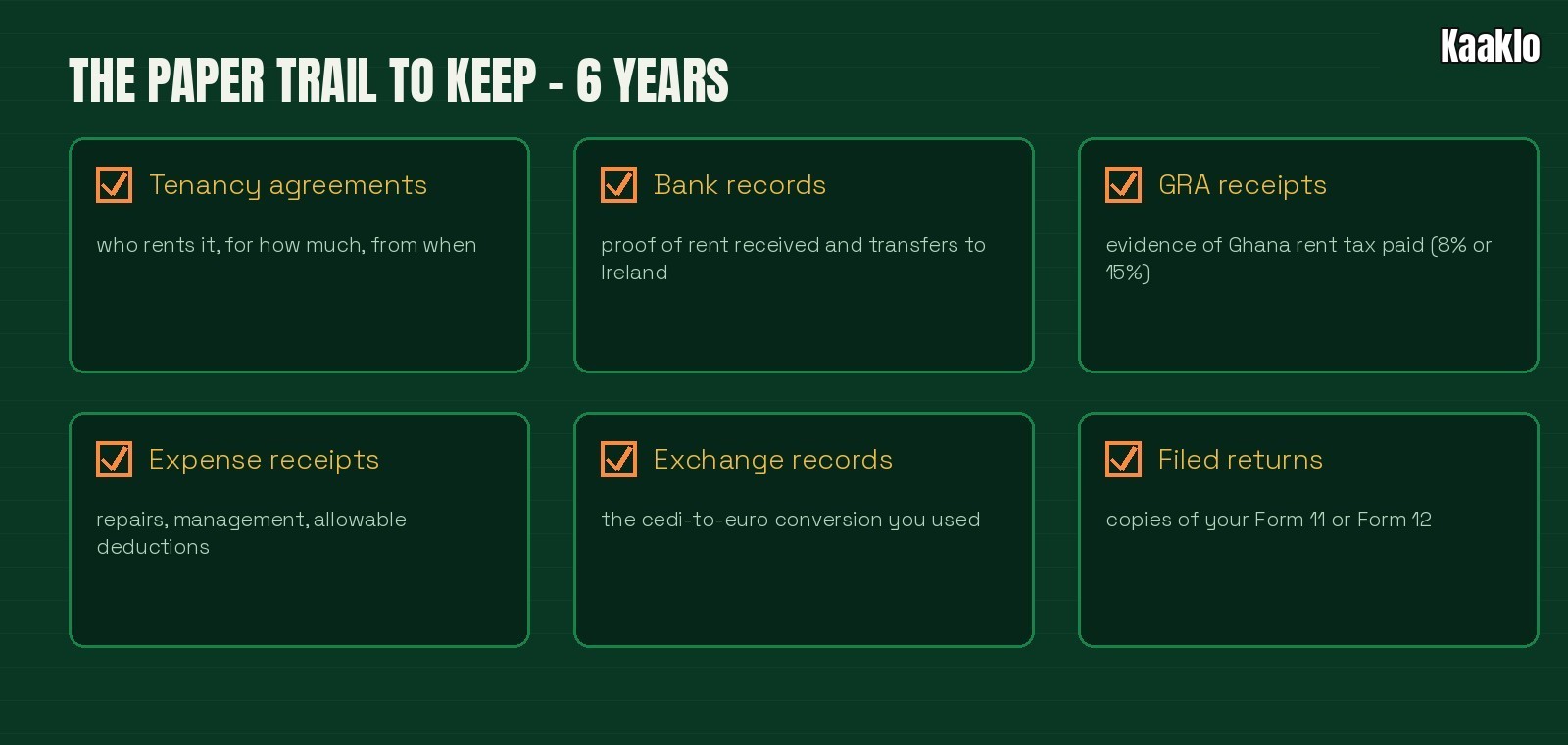
Revenue requires you to keep the original records behind your return for six years: receipts, invoices and the other "linking documents" that show how your figures were calculated. Digital copies can be stored through the ROS Receipts Tracker. [6] For a Ghana rental, that means the tenancy agreement, bank statements showing rent received and any transfers to Ireland, GRA payment receipts, receipts for repairs and management costs, a note of the cedi-to-euro conversion you used, and copies of your filed Form 11 or Form 12.
Dates to remember
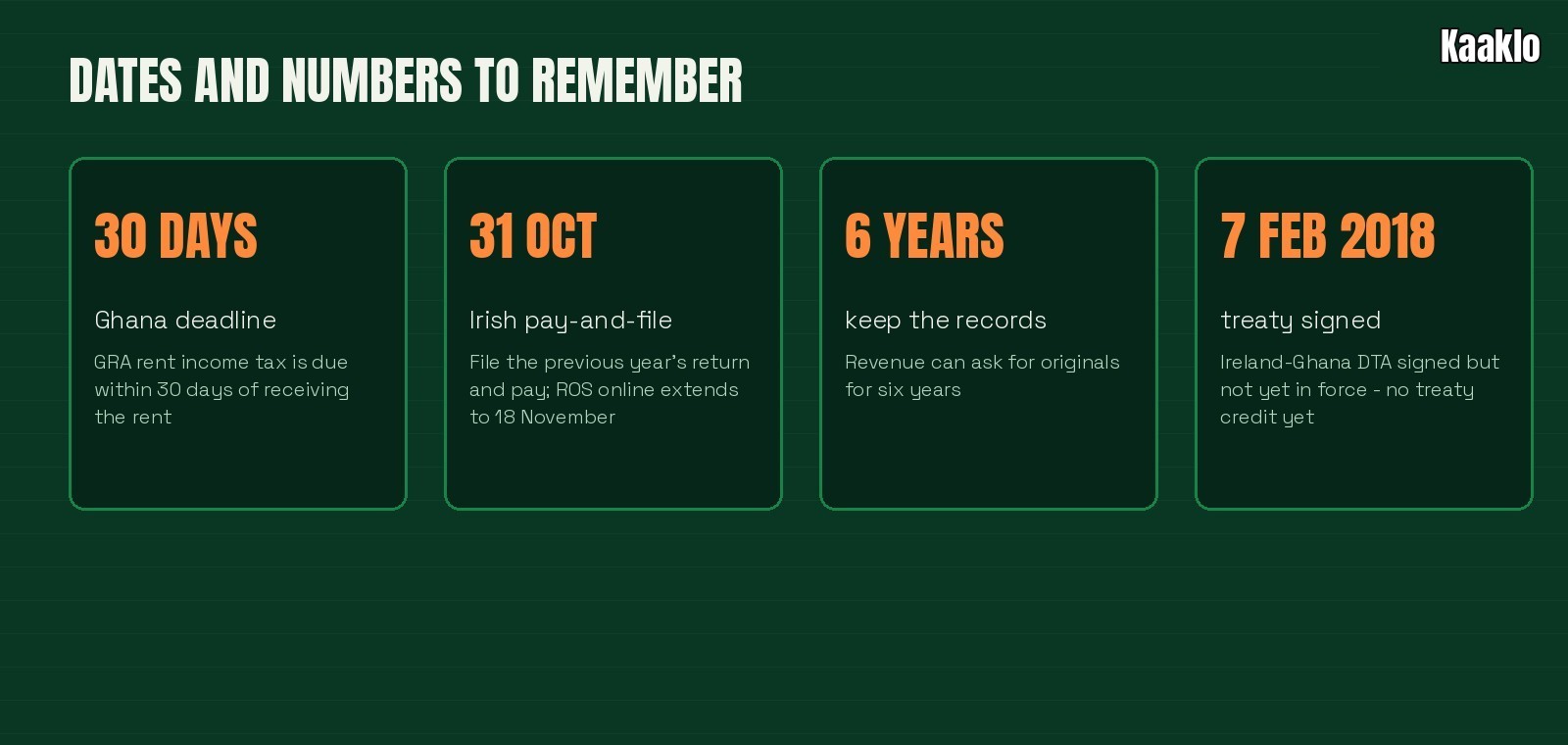
In Ghana, rent income tax is due within 30 days of receiving the rent. [4] In Ireland, by 31 October each year you must pay preliminary tax, file the previous year's self-assessment return and pay any balance; filing online through ROS extends the deadline to 18 November. Late filing adds a surcharge of 5% or 10% of the tax due. [7]
What to do now
If you are not already filing, check whether you need to register for self-assessment or can use the tax-credit route. Pull your Ghana records together before the Irish deadline, and keep them for six years. This guide is general information, not tax advice; cross-border cases turn on your residence, ordinary residence and domicile, so check the Revenue pages below or speak to a tax adviser about your own situation.
Sources and data note
Prepared 12 October 2026. Checked against Revenue.ie and GRA pages current at the dates shown. Not tax advice.
[1] Revenue.ie: Foreign rental income
[2] Revenue.ie: How to calculate your taxable foreign rental income
[3] Revenue.ie: Foreign rental income and double taxation
[5] Revenue.ie: Double Taxation Treaties (Ireland-Ghana signed 7 February 2018, not yet in effect)