Money, home and life for Ghanaians abroad
Ghana's cedi fought back. Now protect the progress.
The recovery is real, but a better exchange rate is not the same as an easier household budget.
By Ernest · 7 October 2026
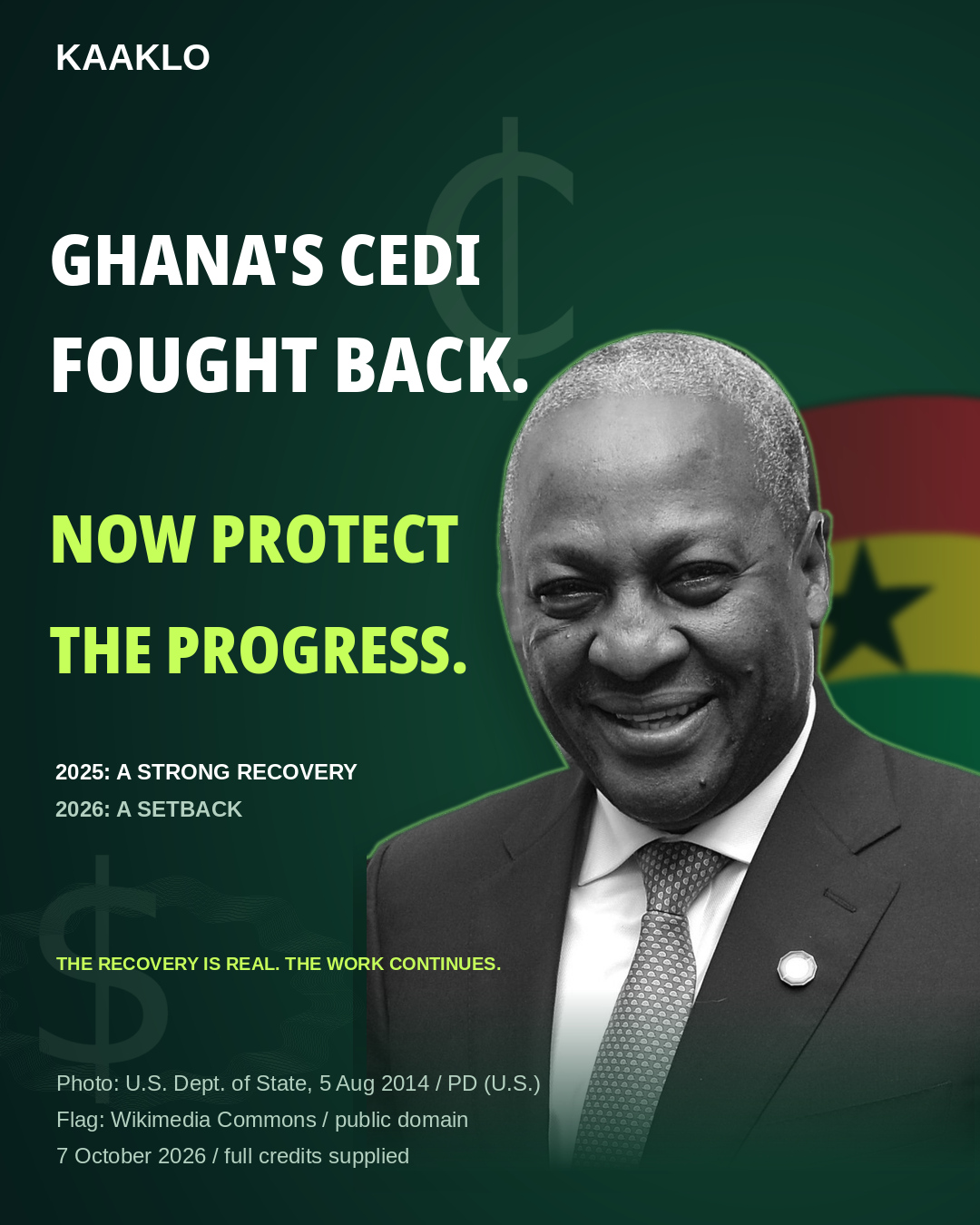
A stronger cedi can be awkward news to celebrate from abroad. Ghana needs a currency that holds its value. Yet if the cedi strengthens at the transfer provider's quoted rate, the same dollar amount converts into fewer cedis before fees. The rate a transfer provider offers matters here, not just the official rate in a news report.
If lower import costs reach household prices, a family may gain elsewhere. If they do not, the country's good news and the family's immediate arithmetic can point in different directions. That tension is worth keeping in mind when judging the recovery under Mahama's government.
What Ghana recovered
The Bank of Ghana reports that the cedi appreciated 40.7% against the US dollar in 2025. The official interbank midpoint moved from GH₵14.70 to the dollar at the end of December 2024 to GH₵10.45 in December 2025. That was a substantial recovery: buying a dollar required fewer cedis. [2][3]
By 6 October 2026, the midpoint was GH₵11.80. Measured in the cedi's dollar value, that represents about 11.4% depreciation since December 2025. Some of the recovery has been lost, though the currency remains about 24.6% stronger than at the end of December 2024. These are official interbank figures, not a promise about a transfer provider's rate. [2][4]
The baseline matters. John Dramani Mahama took office on 7 January 2025, after the 2024 election. December 2024 is close to that starting point, but it is not an inauguration-day quote. The 24.6% comparison should not be presented as an exact return from his first day in office. [1]
The cedi is still ahead of that baseline, but this year's losses show how quickly part of a recovery can slip away. What supported the gain, and can that support last?
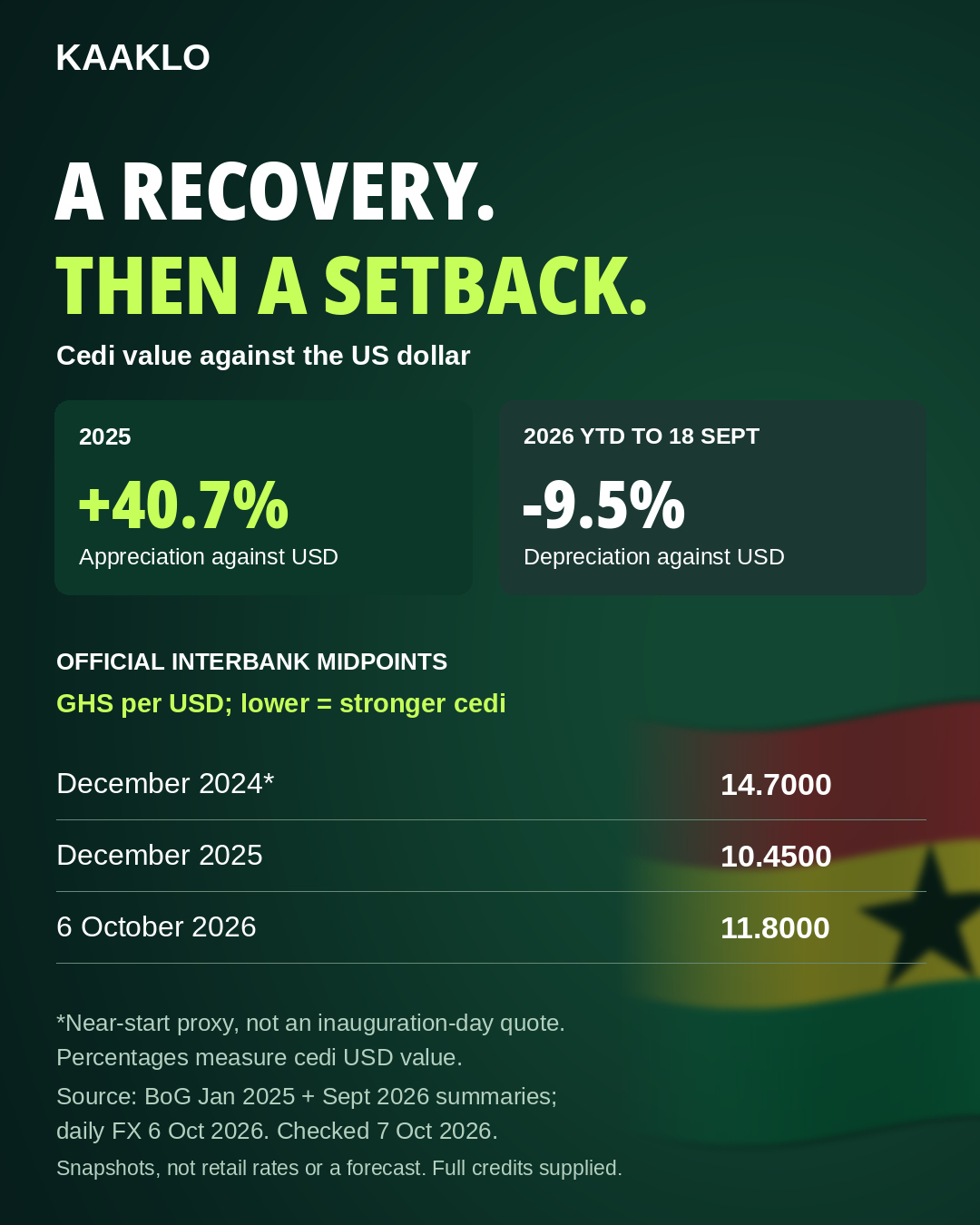
Cedi value against the US dollar
| Period | Change |
|---|---|
| 2025 | +40.7% appreciation |
| 2026 through 18 September | -9.5% depreciation |
| Date | GHS per USD |
|---|---|
| December 2024 | 14.7000 |
| December 2025 | 10.4500 |
| 6 October 2026 | 11.8000 |
December 2024 is a near-start proxy, not an inauguration-day quote. Percentages measure the cedi's USD value. The -9.5% figure stops at 18 September, not 6 October; depreciation through 6 October is about 11.4%. Snapshots, not retail rates or a forecast.
Bank of Ghana January 2025 and September 2026 summaries, daily FX for 6 October 2026. Checked 7 October 2026. Source links below the article.
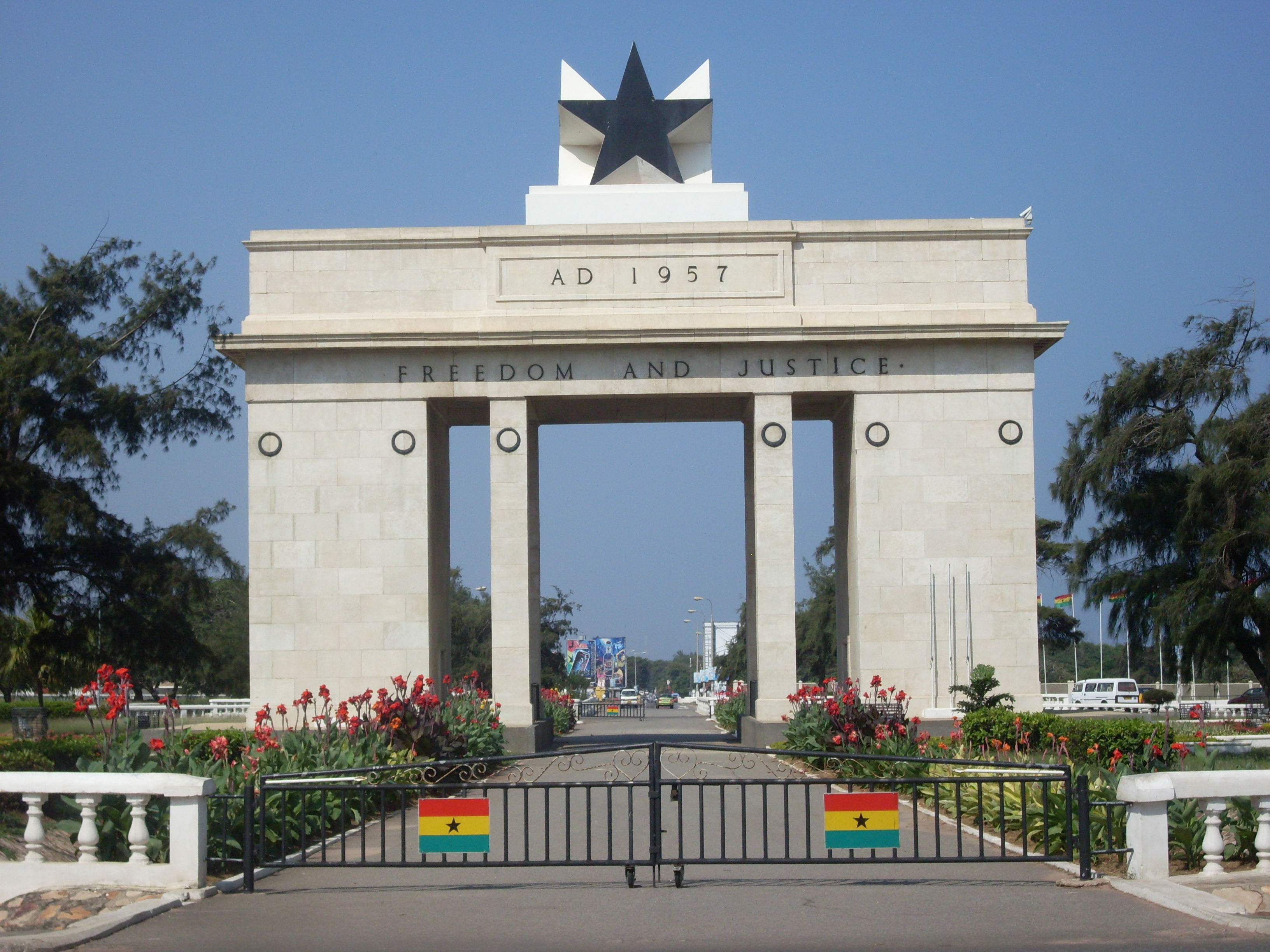
Accra's Independence Arch (Black Star Gate), photographed in 2008.
George Appiah · 3 January 2008 · CC BY 2.0 · Licence. Full original, unchanged; displayed at responsive size.

What supported the recovery?
Government fiscal discipline has a place in the explanation. So does the work of the Bank of Ghana. In May 2025, the bank linked the rebound through 21 May to tight monetary policy, fiscal consolidation, reserve accumulation, enforcement of foreign-exchange rules and improved market sentiment. It also described gold, cocoa and remittance inflows supporting external performance. That was an assessment of the rebound at that point, not an explanation of the entire year's gain. [5]
Ghana's reform programme also predates this presidency. The IMF approved its $3 billion programme in May 2023, before Mahama's January 2025 inauguration. An assessment of his government should ask what discipline it has maintained during its term, without giving it sole ownership of a recovery shaped by earlier reforms, the central bank and foreign-exchange earnings. [7]
This matters beyond an argument over political credit. If the recovery depended on several sources of support, defending it requires more than confidence in one leader. It requires the policy discipline and foreign-exchange flows themselves to hold up.
The household budget remains the test
There are encouraging figures beyond the currency. The Bank of Ghana reported 6.0% real GDP growth for 2025 and 6.0% year-on-year growth in the second quarter of 2026. Its September statement put gross international reserves at $12 billion on 22 September, enough for about 4.5 months of imports. [3][6]
Inflation was 5.0% in August, up from 4.6% in July. A fall in inflation would mean prices were rising more slowly, not that earlier increases had been undone. A low inflation rate does not, on its own, tell us whether a family can afford its bills. The same September statement noted credit risk and pressure from utility and fuel prices. Those pressures matter when judging how much relief the recovery can bring. [6]
For a business buying dollar-priced goods, a stronger cedi can ease costs. Whether a customer benefits depends on what happens to the selling price. For a family receiving money from abroad, that stronger cedi quote would mean fewer cedis from a fixed dollar transfer before fees. Any offsetting benefit from lower goods prices would depend on those savings reaching the customer.
The 2025 gain gives Ghana a reason to defend the recovery, not to dismiss the questions raised by the 2026 losses. For someone sending money home, the answer cannot end with the number of cedis received. It has to include what those cedis can buy. Mahama's government deserves to be judged on whether stability lasts and whether lower costs reach household prices, rather than on the exchange rate alone.

Cape Coast Castle beside the Atlantic, photographed in 2011. A historic site, not evidence of today's economic conditions.
Rjruiziii · 26 June 2011 · CC BY-SA 3.0 · Licence. Full original, unchanged; displayed at responsive size.


Palms along Busua's coastline in Ghana's Western Region, photographed in 2010.
Mac Jordan · 31 December 2010 · CC BY 2.0 · Licence. Full original, unchanged; displayed at responsive size.

Sources and data note
Prepared 7 October 2026. Latest available daily FX observation used: 6 October 2026. Derived percentages measure the cedi's US-dollar value, not the percentage change in the GHS-per-dollar quote. These figures do not predict future rates.
[1] Public Services Commission, inauguration report
[2] Bank of Ghana, January 2025 economic and financial data, FX table
[3] Bank of Ghana, September 2026 economic and financial data
[4] Bank of Ghana, daily interbank FX rates
[5] Bank of Ghana, May 2025 monetary policy statement
[6] Bank of Ghana, September 2026 monetary policy statement
[7] IMF, programme approval, May 2023
Archival scenery adds context, not proof of economic progress.