UK National Insurance: why 8% is not charged on every pound
The 2026-27 employee bands, HMRC's £1,000-a-week example, and the separate rules for self-employed profits.
By Ernest · 8 November 2026
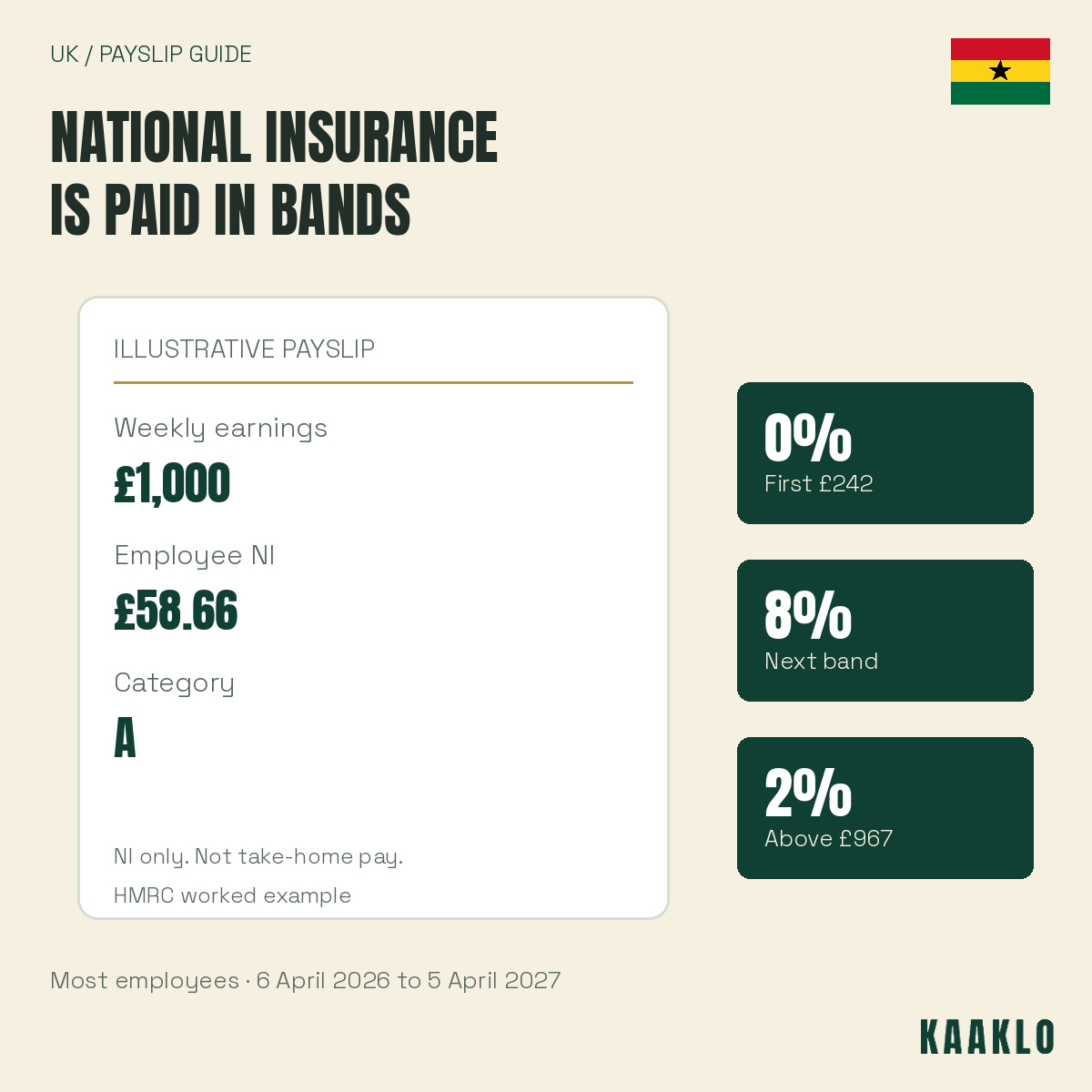
Checking your UK payslip before deciding what you can send home? National Insurance is not usually one flat percentage of everything you earn. Your employment status, earnings bands and National Insurance category matter.
Most employees: 8%, then 2%
For the tax year 6 April 2026 to 5 April 2027, GOV.UK lists the main employee Class 1 rates as 8% on weekly earnings above £242 up to £967, and 2% on the part above £967. The corresponding monthly thresholds are £1,048 and £4,189.
These are employee contributions, deducted through payroll. Your employer's contribution is separate. Income Tax and pension deductions are separate too, so this guide does not calculate your take-home pay.
HMRC's £1,000-a-week example
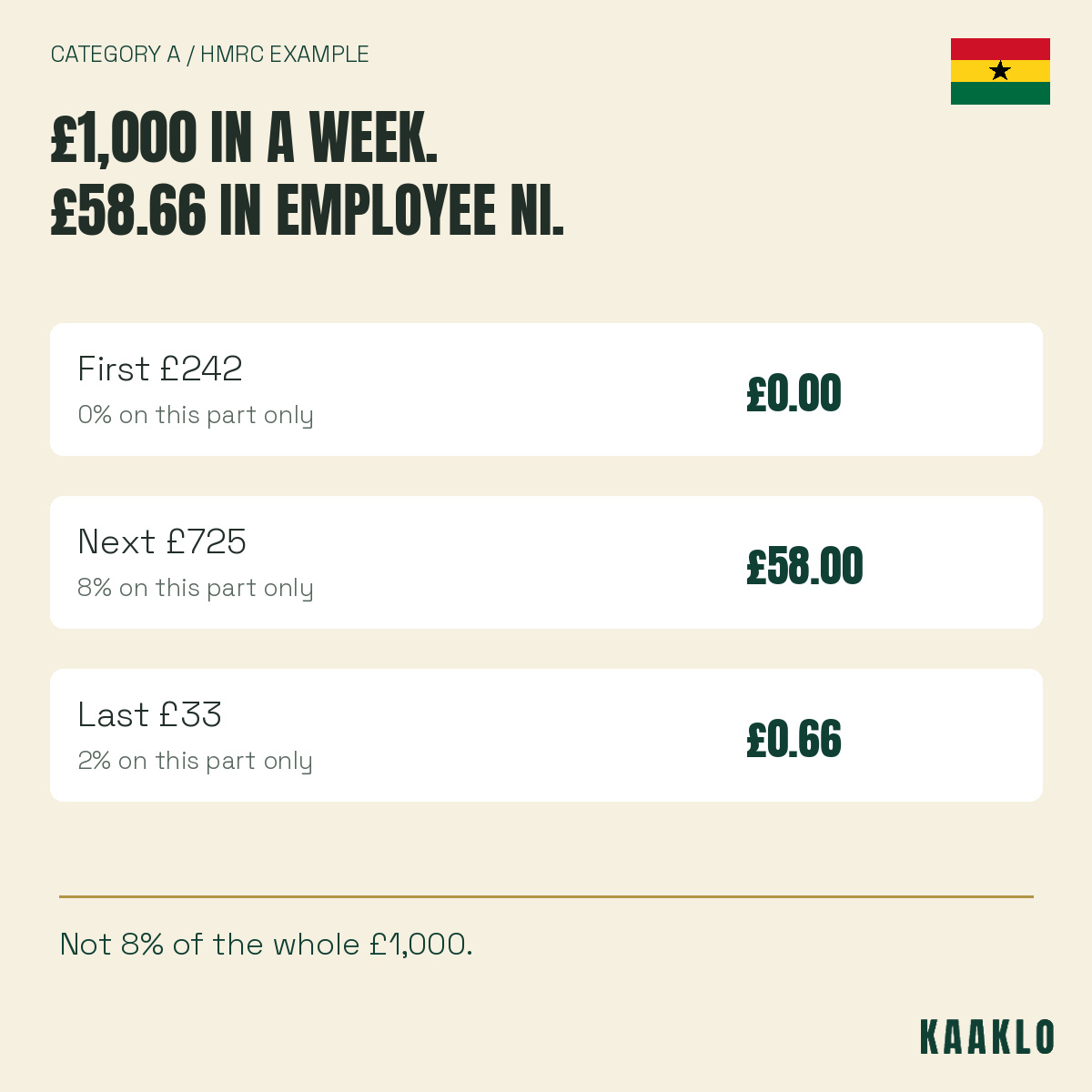
For an employee in category A earning £1,000 in a week, HMRC shows no employee NI on the first £242, £58 on the next £725, and £0.66 on the final £33. That makes £58.66 for the week, not £80.
Check your category
The 8% band does not apply to every worker. HMRC's table has different rates for some category letters, including certain married women and widows with a valid election and employees deferring contributions. Check the category on your payslip against the official category table. Ask payroll if the category or deduction looks wrong.
Self-employed? Use profits
Class 4 uses annual profits, not turnover. For 2026-27, GOV.UK lists 6% on profits over £12,570 up to £50,270, then 2% on profits above £50,270.
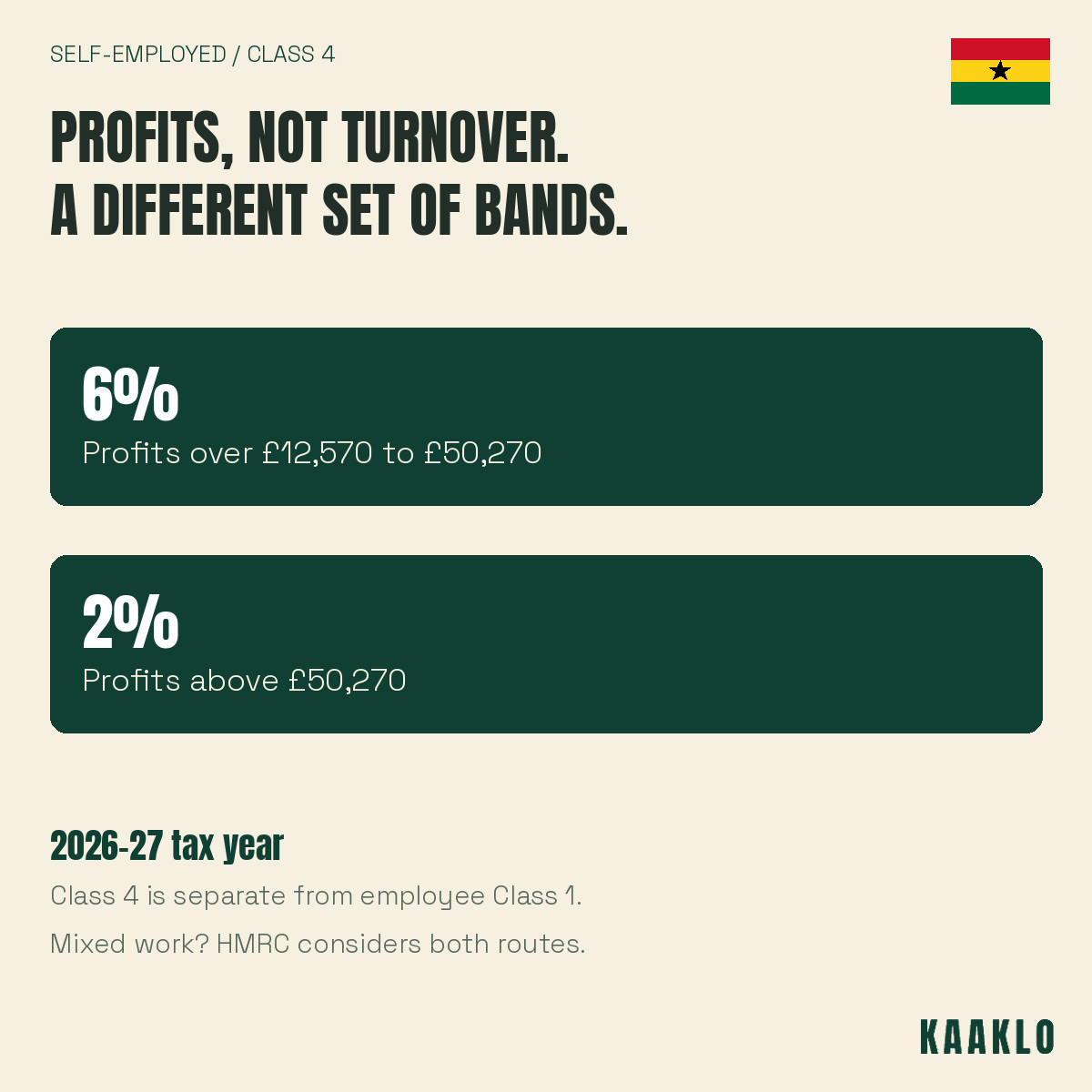
If you have both wages and self-employed work, both Class 1 and Class 4 may apply. HMRC says the amount depends on your combined work and will be confirmed after Self Assessment. Directors and some other groups have different rules.
Use the right year's rules
These figures were checked on 8 November 2026. They explain current published bands, not a newly announced tax change or a personal tax assessment. Before relying on an amount, check your pay period, category and circumstances with payroll or HMRC.
Read next