Money, home and life for Ghanaians abroad
Ghana T-bills from the UK
Ghana's treasury bills pay close to 10%. The catch is the currency. The yield is real, but it is paid in cedis, and your life is priced in pounds.
By Ernest · 8 October 2026
The rate that gets your attention
A 9.8% yield looks like a gift next to a UK savings account. Ghana's one-year treasury bill cleared at that level at the Bank of Ghana auction issued 5 October 2026 [1]. Before anyone moves money, it is worth being exact about what that number is, and what it is not.
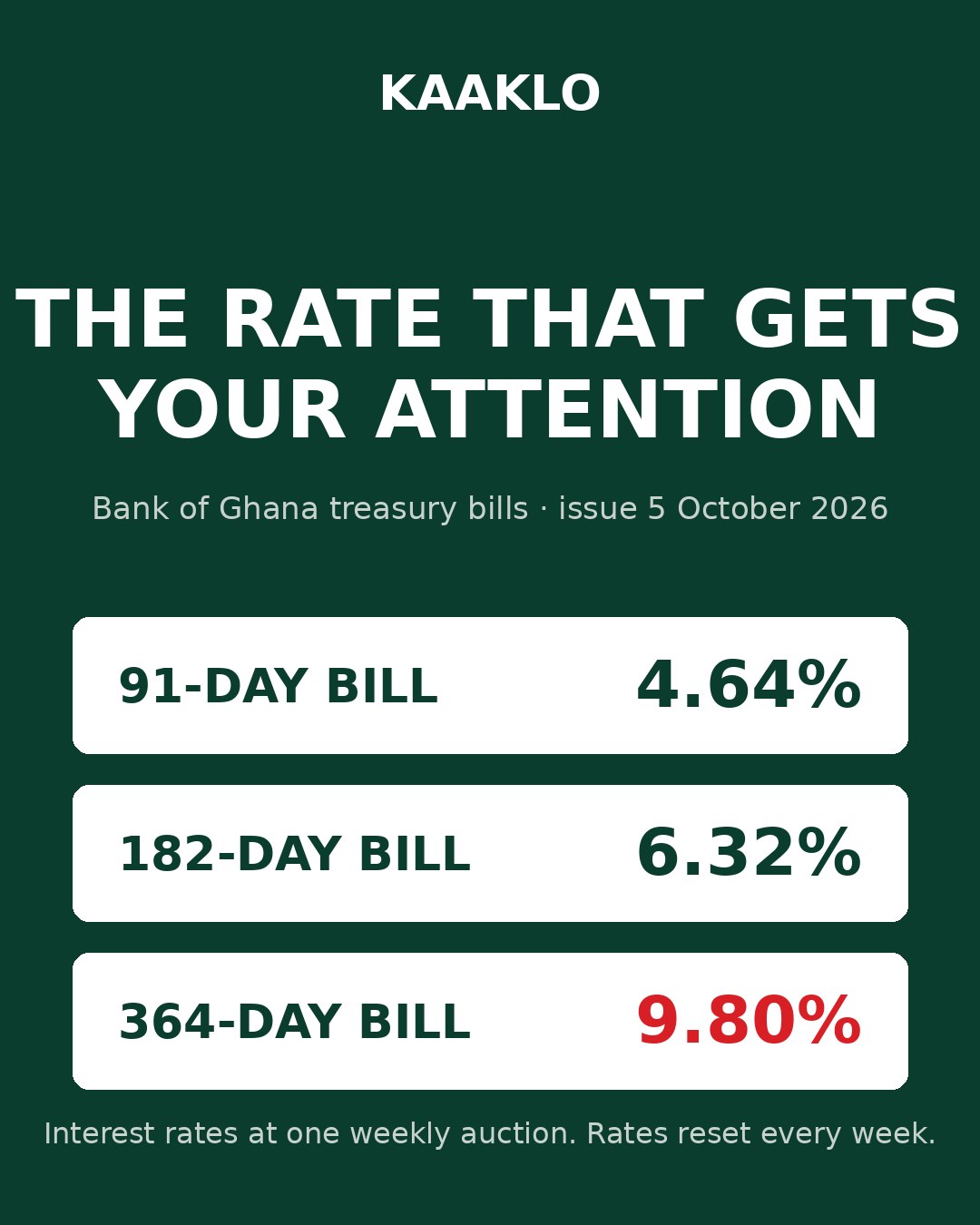
| 91-day bill | 4.64% interest rate |
| 182-day bill | 6.32% interest rate |
| 364-day bill | 9.80% interest rate |
| Source | Bank of Ghana, issue 5 Oct 2026, checked 8 Oct 2026 |
Rates reset at each weekly auction. These are snapshots of one issue, not a standing offer and not a forecast [1].
One genuine help: interest paid to an individual on Government of Ghana securities, including treasury bills, is exempt from Ghana income tax [3][4]. What you earn is not trimmed at source in Accra.
Can you actually buy from the UK?
Yes, and Ghanaians abroad do it every week. The weekly Bank of Ghana auction is wholesale, so individuals buy through a bank or a licensed broker rather than directly [5]. In practice that means:
- A bank account in Ghana. The diaspora accounts are built for exactly this: GCB's Link2Home, Zenith's diaspora account, UBA's Non-Resident Ghanaian account, Stanbic's diaspora banking [6][7][8][9].
- A Ghana Card and the bank's KYC documents. Most diaspora account processes are designed to be completed from abroad [2].
- An instruction to the bank, or an account with a broker such as Databank, which openly sells Bank of Ghana treasury securities to Ghanaians at home and abroad [10]. Minimum amounts vary by bank and broker [2].
The currency catch
Here is the part the headline rate hides. The bill pays you in cedis. What those cedis are worth in pounds when the bill matures is a separate bet, and lately it has been a lively one.
The cedi appreciated 40.7% against the US dollar in 2025. In 2026 it gave back about 11.4% of its dollar value through 6 October, on the Bank of Ghana's official interbank midpoints [11]. Run that against the yield: a one-year bill paying 9.8% in cedis, held through a period when the cedi loses roughly 11% of its value, returns close to flat in hard currency. A good year for the cedi flips the arithmetic just as far the other way.
The yield is real. So is the exchange rate's vote. A 9.8% cedi return is only a 9.8% return if your future is priced in cedis.
The pound is not the dollar, and sterling-cedi moves tell their own story. The dollar figures above show the scale of currency swings, not your exact pound result. Anyone planning a transfer should check the actual sterling rate at both ends of the investment.
What HMRC expects
Since 6 April 2025 the UK has taxed residents on their worldwide income as it arises; the old remittance basis was abolished [12]. Ghanaian T-bill interest belongs on the foreign pages of your Self Assessment.
There is one narrow exception. Qualifying new residents, broadly people in their first four UK tax years after at least ten consecutive years living abroad, can claim the foreign income and gains regime and keep eligible foreign income out of UK tax [13]. Most UK-based Ghanaians reading this will not qualify.
And because Ghana charges no tax on the interest, there is no foreign tax credit to soften the UK bill. Your exact liability depends on your tax band and allowances, so treat this as orientation, not a calculation, and check the HMRC guidance or a qualified adviser [12].
Who this suits, and who it does not
- Suits: money with cedi plans. If the building project, family costs or the move home are ahead of you, cedi yield is not a risk layered on your life. It matches it. The bill matures into the currency you were going to spend anyway.
- Does not suit: money needed back in pounds. If you will need a fixed pound amount on a fixed date, this is not a savings account with a better number. It is a currency position with a yield attached.
- A middle path. Shorter bills reprice faster. A 91-day bill rolls over four times a year, so you are never locked long into yesterday's rate, in either direction. Remember each rollover clears at that week's auction, and next year's rates may be lower [1].
The bottom line
Treasury bills are one of the few places the cedi pays you well for waiting. The honest question is not "is 9.8% good?" It is "what will I need this money to be when it matures?" If the answer is cedis, the yield is yours. If the answer is pounds, the exchange rate gets the final word.
Sources and data note
Prepared 8 October 2026. Latest Bank of Ghana T-bill issue used: 5 October 2026, checked 8 October 2026. FX figures are official interbank midpoints against the US dollar, not transfer-provider rates, and sterling moves differently. Nothing here predicts future rates.
[1] Bank of Ghana, treasury bill rates, issue 5 October 2026
[2] treasurybillrateghana.com, T-bill investment requirements and documentation
[4] Income Tax Act 2015 (Act 896) as amended, section 7 exemptions
[5] ghanacitizenship.com, how Ghana treasury bills work - the auction is wholesale
[6] GCB Bank, Link2Home account
[7] Zenith Bank Ghana, diaspora account application
[8] UBA Ghana, diaspora banking - Non-Resident Ghanaian account
[9] Stanbic Bank Ghana, diaspora banking
[10] Databank, Bank of Ghana treasury securities
[12] GOV.UK, HS266 Foreign income and gains (FIG) regime 2026 - arising basis from 6 April 2025
[13] GOV.UK, check if you can claim the 4-year foreign income and gains regime
Read: who controls the money you send? · Cedi recovery analysis · Rate tracker